Donna De Salvo on Andy Warhol
02.02.2019 from 16:00 to 17:30
Theater, 4 pm
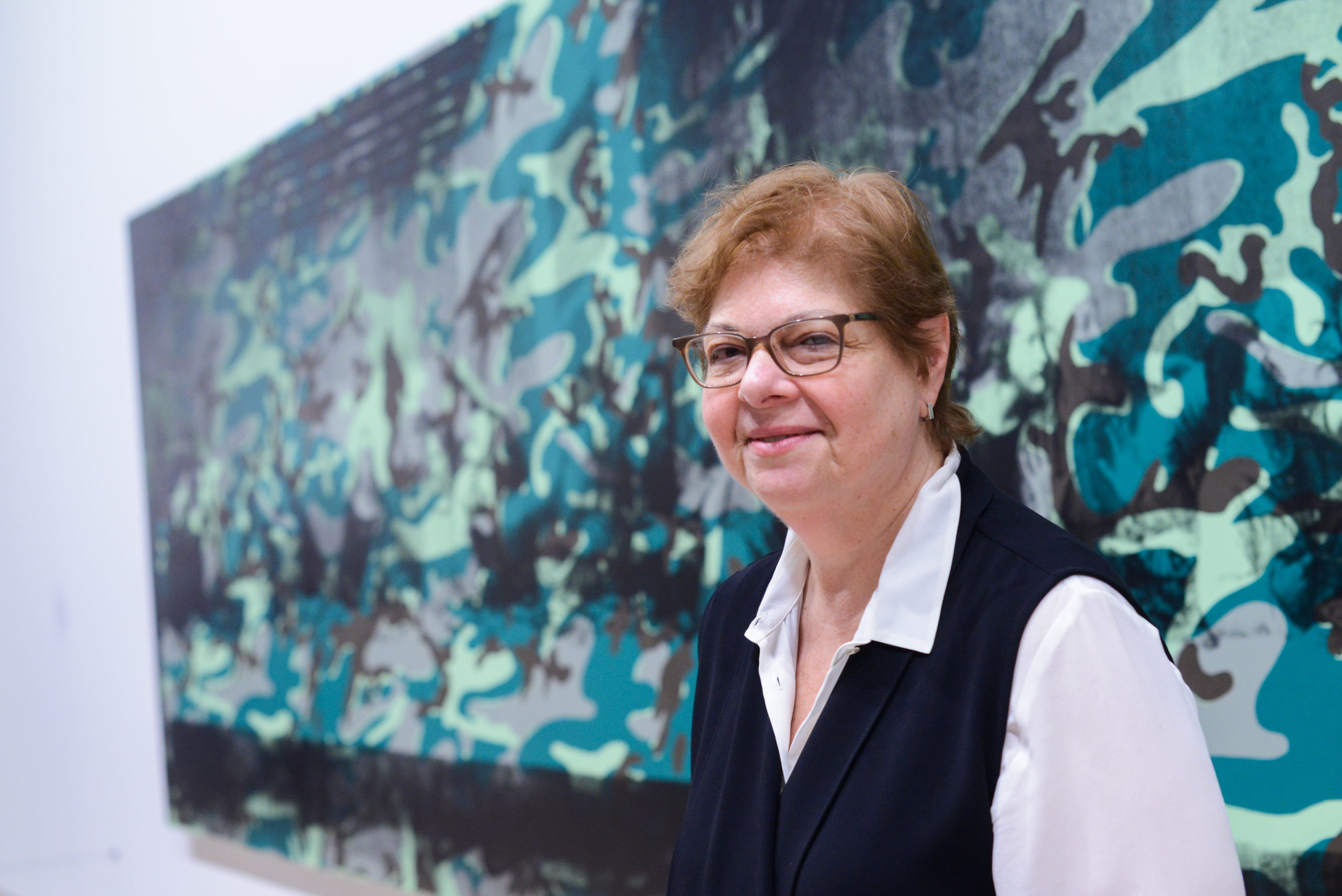
The Castello di Rivoli Museo d’Arte Contemporanea organizes, in the context of the exhibition Andy Warhol. Two masterpieces from the collection of Francesco Federico Cerruti curated by Fabio Belloni, a lecture by Donna De Salvo, Deputy Director for International Initiatives and Senior curator at the Whitney Museum of American Art in New York, one of the greatest scholars and experts in the work of Andy Warhol. Donna De Salvo, senior curator of the Whitney Museum of American Art’s current retrospective Andy Warhol — From A to B and Back Again, will discuss Warhol’s career and legacy, and his enduring relevance in the 21st century. Taking the exhibition as an entry point, this lecture will delve into lesser-known aspects of the artist’s career, including his groundbreaking experiments in film, his engagement with the history of art as well as with new technologies, and his sustained interest in abstraction. Andy Warhol — From A to B and Back Again is the largest monographic exhibition to date at the Whitney’s new location, with more than 350 works of art, many assembled together for the first time. It is currently on view at the Whitney until March 31, 2019, before traveling to the San Francisco Museum of Modern Art and the Art Institute of Chicago. Donna De Salvo will be in conversation with Carolyn Christov-Bakargiev to discuss the particular bond that brings together Andy Warhol and the poetics and the history of the protagonist of metaphysical painting, Giorgio de Chirico.
Biographies
Donna De Salvo is the Deputy Director for International Initiatives and Senior Curator at the Whitney Museum of American Art, New York. She joined the museum in 2004 and was appointed the museum’s first Chief Curator in 2006, a post she held until 2015. In her previous role, De Salvo oversaw the museum’s artistic program, was instrumental in the design of the Whitney’s new building, and led the curatorial team for the museum’s inaugural presentation, America Is Hard to See (2015). Currently, she is leading the museum’s efforts to define and communicate an expanded notion of art in the United States, both domestically and internationally. In addition, she organizes exhibitions and collection displays, co-directs the Painting and Sculpture Acquisition Committee, and oversees the Andy Warhol films catalog raisonné project. Exhibitions she has curated or co-curated at the Whitney include: Andy Warhol—From A to B and Back Again (2018—ongoing), Hélio Oiticica: To Organize Delirium(2017), Open Plan: Michael Heizer (2016), Open Plan: Steve McQueen (2016), Sinister Pop (2012—2013), Roni Horn aka Roni Horn (2009-2010), and Lawrence Weiner: AS FAR AS THE EYE CAN SEE (2007-2008). A noted expert on art of the 1960s, and Andy Warhol in particular, De Salvo was Adjunct Curator for the Andy Warhol Museum and was curator of Andy Warhol: Disaster Paintings, 1963 (Dia Art Foundation, 1986); Andy Warhol: Hand-Painted Images, 1960-62 (Dia Art Foundation, 1987); Hand Painted Pop: American Art in Transition 1955-1962 (LAMoCA, 1992), “Success is a Job in New York”: The early art and business of Andy Warhol, (Grey Art Gallery, 1989); and a retrospective of the artist’s work held at Tate Modern (2002). From 1981 to 1986, De Salvo was a curator at the Dia Art Foundation, where she worked closely with several artists, including John Chamberlain, Walter De Maria, Donald Judd, Cy Twombly, and Andy Warhol. She has served as senior curator at Tate Modern; Curator-at-Large, Wexner Center for the Arts; and Robert Lehman Curator, The Parrish Art Museum. She is a recipient of the Alfred H. Barr Jr. Award from the College Art Association.
Andy Warhol was born in Pittsburg in 1928 to Czechoslovakian immigrant parents. At seventeen he enrolled in the drawing and decorative arts courses at the Carnegie Institute of Technology. In 1949 he moved to New York, where he began to work as an illustrator for fashion magazines and advertising agencies. He switched to painting in 1960. A couple of years later he began to work with silkscreen, a technique that made execution impersonal and also gave him the possibility of reproducing a potentially infinite number of prints while maintaining the original quality. “The reason I’m painting this way,” he said in 1967, “is that I want to be a machine, and I feel that whatever I do and do machine-like, is what I want to do. I think everybody should be a machine.” In 1963 Warhol moved his studio to a large loft on 47th Street, where, with the help of a team of assistants, he expanded his creative activity. The Factory – which was the name given to his workshop – produced silkscreen prints, but also photographic and cinematic works. The iconography was certainly wide-ranging: themes of violent death (victims of an airplane crash, the electric chair); Hollywood celebrities (Marilyn Monroe, Elvis Presley, Liz Taylor) and typical American food and beverage products (Coca-Cola bottles, Campell’s soup cans). In his last years, the artist also devoted himself to television and publishing projects. At the same time, he began to revisit the great masterpieces of the past (from Leonardo to de Chirico) and also collaborated with new-generation artists. He died in 1987, from complications following surgery.