Inserzioni: Guglielmo Castelli, Lydia Ourahmane, Oscar Murillo
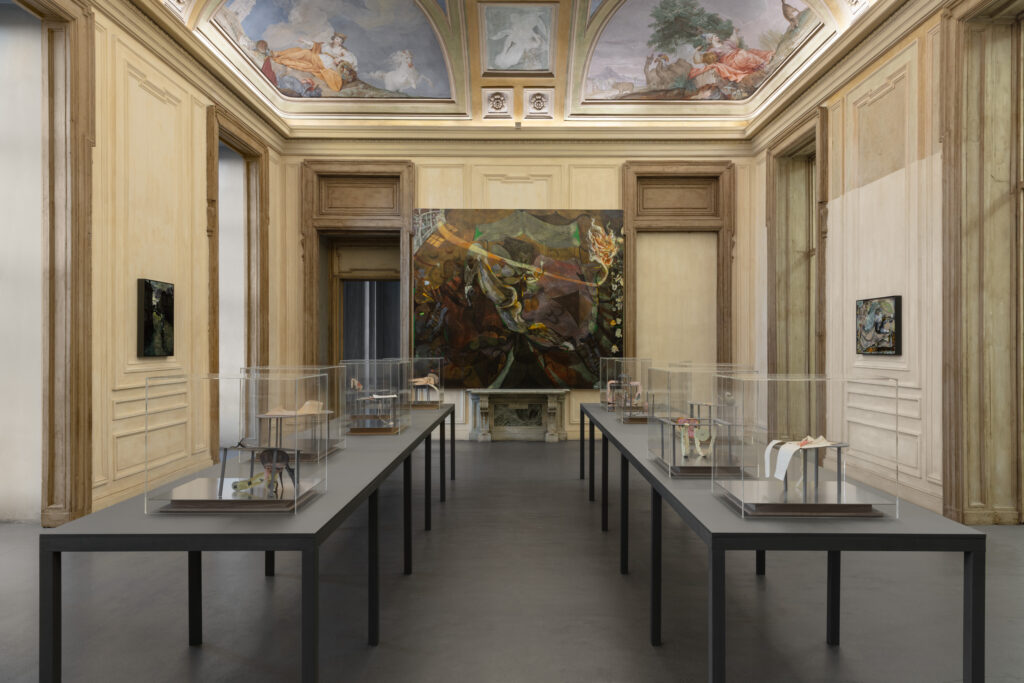
Guglielmo Castelli
installation view in Inserzioni, Castello di Rivoli Museo d’Arte Contemporanea, Rivoli-Torino, 2025
Photo Sebastiano Pellion di Persano
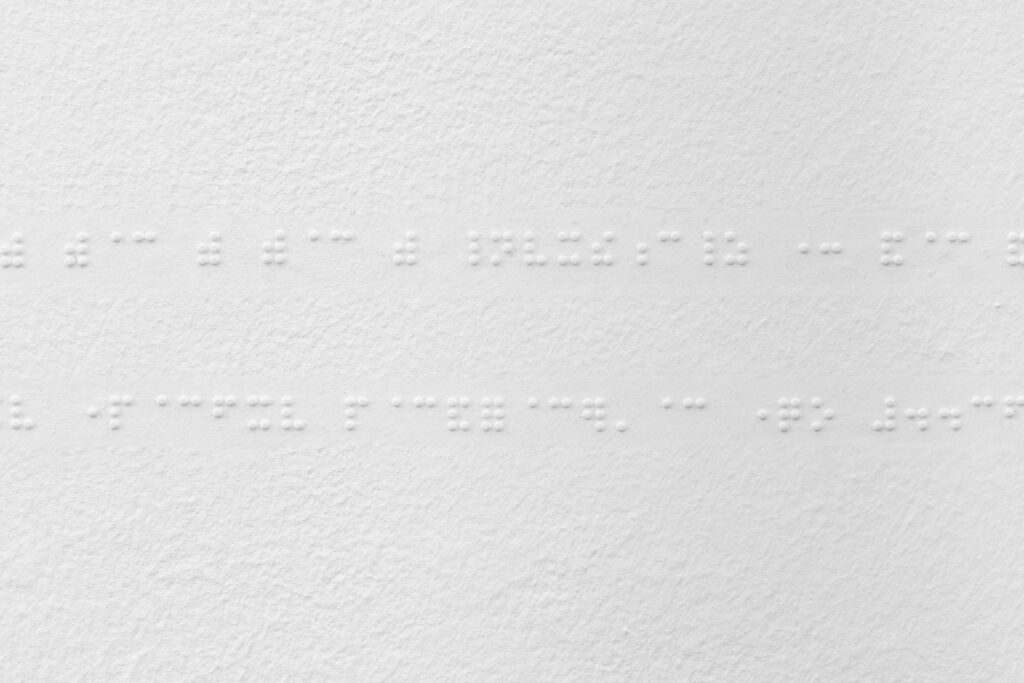
Lydia Ourahmane
Per voce (For voice), 2025
installation view in Inserzioni, Castello di Rivoli Museo d’Arte Contemporanea, Rivoli-Torino, 2025
Photo Sebastiano Pellion di Persano
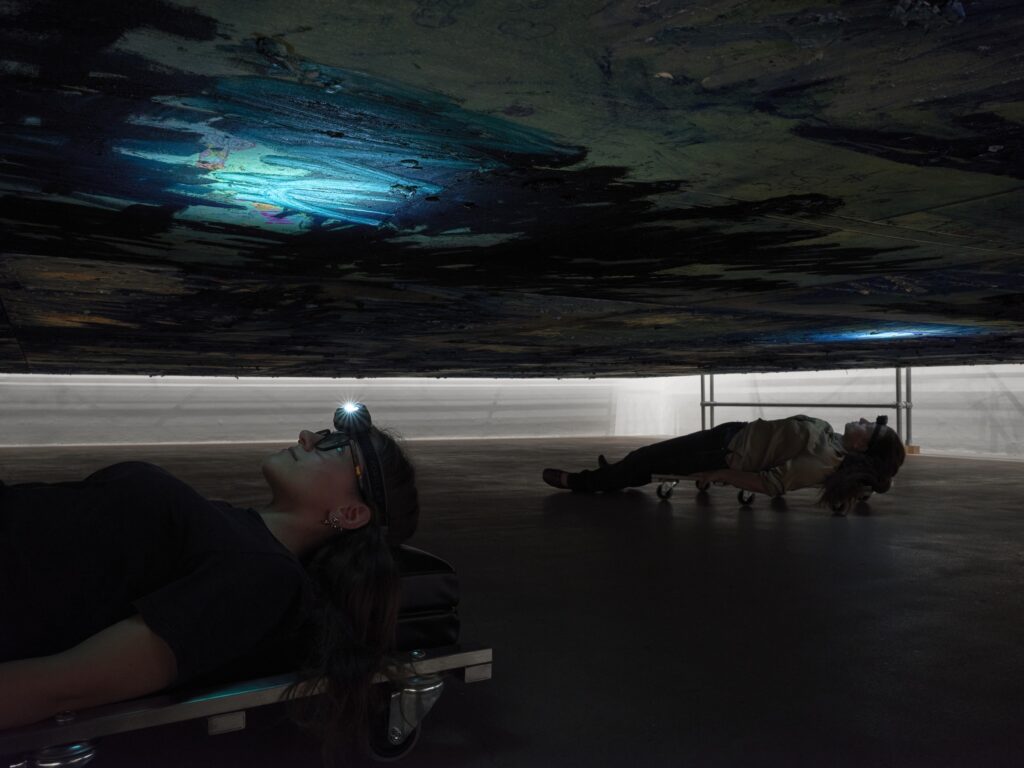
Oscar Murillo
A see of history, 2025
installation view in Inserzioni, Castello di Rivoli Museo d’Arte Contemporanea, Rivoli-Torino, 2025
Courtesy the artist
Photo Tim Bowditch
© Oscar Murillo
26 September 2025 – February 2026
Castello di Rivoli Museo d’Arte Contemporanea presents, as part of the institution’s 40th anniversary celebrations, the series Inserzioni (Insertions), a new format which commissions contemporary artists to create works specifically for the Castello. The artists featured in the first edition of the project are Guglielmo Castelli (Turin – Italy, 1987), Lydia Ourahmane (Saïda – Algeria, 1992), and Oscar Murillo (Valle del Cauca – Colombia, 1986). On the occasion of Inserzioni, the museum will also present the winning work of the 2025 Collective Prize, Culture Lost and Learned by Heart: Butterfly, 2021, by Adji Dieye (Milan – Italy, 1991), and recently acquired works Mare con gabbiano, 1967, by Piero Gilardi (Turin – Italy, 1942–2023) and a.C., 2017, by Roberto Cuoghi (Modena – Italy, 1973).
Inserzioni introduces new commissions into the fabric of the Castello di Rivoli’s collection, inviting a selection of artists particularly relevant today to each intervene in a room of the museum, relating to the ornate architecture, the museum’s exhibition history and the other works currently on display. The format, lasting six months and renewed twice a year, transforms rooms traditionally dedicated to Collection displays into a constantly evolving collective exhibition, bringing new voices into the centre of the institutional narrative, rather than exhibiting them in a separate dedicated room, allowing the museum to grow its cultural narration with artists, movements, and geographical areas which have been underrepresented in the museum’s exhibition history and collection.
Inspired by the formula inaugurated by the first director, Rudi Fuchs, for the museum’s first exhibition Ouverture in 1984, each artist is invited to create a work specifically conceived for one of the Castello’s stately rooms, as if to collaborate with them across historical time. As with the first exhibition, the artists and the stories they tell are placed at the centre of the project, emphasising the value of their individual styles. The museum intends to maintain its characteristic openness to the voices of artists at a key moment in the writing of the art history it narrates. This modus operandi incorporates principles particularly relevant today, such as those of inclusivity, openness to other cultures and approaches, and social and cultural participation.
One of the Castello di Rivoli’s particularities is that, since the 18th century, it is an unfinished place. This characteristic turns it into a “container” that artists can literally, or metaphorically, complete by inserting themselves in this uncompleted edifice. This is a unique experience for artists and visitors alike and has given birth to memorable installations. Often the works enriched by the dialogue with the rooms in which they are installed, and vice versa – the rooms becoming stronger thanks to the artistic interventions they contain.
Inserzioni will open to the public from Friday 26 September 2025 until February 2026.
The project is supported by the Radical Commissioning Group, a small cohort of benefactors who believe, like the museum, in the need to give artists carte blanche to create visionary works, while at the same time giving the institution the opportunity to expand its voice.
Guglielmo Castelli
Guglielmo Castelli has worked on a new body of works to be exhibited in the frescoed room dedicated to “the four continents”. The artist presents a new sculptural series, in which some of the characters that populate his paintings escape from them to express in two-dimensional form, within curious three-dimensional environments, an atmosphere of silent childhood and waiting. Made of paper cutouts, these human figures dance and revolve around table maquettes designed by the artist of an imaginary home and theatre setting. On the walls, a series of new paintings — including a monumental one measuring over three metres — depict Castelli’s typical fantastic and condensed atmospheres in which multiple actions, repeated falls and failures take place. In the adjacent long, thin room, a number of works on paper are exhibited, as well as, for the first time, a special presentation of Castelli’s preparatory materials and sketchbooks. They include studies for the characters of his invented world, scrap materials that are converted into an ecosystem of possibilities for composition and layering, together with composition studies that reveal the stages in his creative process. The project by Guglielmo Castelli is supported by PAC2025 – Piano per l’Arte Contemporanea, promoted by the Directorate-General for Contemporary Creativity of the Italian Ministry of Culture.
Lydia Ourahmane
Per Voce (For voice), 2025, is a new commission by Lydia Ourahmane made in collaboration with her sister Sarah Ourahmane, a composer and musician. A composition written for three visually impaired singers unfolds across two rooms of the museum. Barely visible but perceptible to the touch, the score is embedded into the walls of each room to remain permanently open to future activations. The score studies the architecture: it is completely determined by the room’s dimensions, with windows and doors dictating pauses and wall lengths determining duration. Upon activation, each singer navigates their part, tracing the score in Braille along the walls as they move through the Castello. When translating a musical phrase into Braille, the six-dot cell represents the pitch and rhythm of each note alongside which key and octave the composition is written in. The scores manifest as a single line with the notes, their duration, height in octaves, ligatures, pauses and interpretative instructions communicated one after the other in sequence. By reducing the amount of ornaments or instructions each singer apports their personal logic to each phrase. The singers must therefore memorise the distinct elements and then piece them back together, creating an amplified possibility for entropy, evolving with each singer’s method determining the spatial choreography of the score. Room 5 hosts a kinetic audio system on linear rails replaying a recording of the performance set onto three speakers. The speakers move to replicate each singer’s cadence, translating the score in their absence.
Oscar Murillo
Following a visit to the Museum, Oscar Murillo chose Room 18 as the setting for his immersive site-specific installation, A see of history, 2025. The piece brings together 48 paintings from Murillo’s Disrupted Frequencies series in an expansive painted plane that invites visitors to experience the artwork from below, as though a fallen fresco suspended in time. Comprising a tapestry of woven canvases — sourced from Murillo’s Frequencies database — the installation explores a tension between vision and vastness, imagining new carved territories in a sea of layered marks. Initiated in 2013, Frequencies involved affixing blank canvases to school desks around the world and capturing the conscious and unconscious marks left by students. Conceived by the artist as analogue recording devices, these canvases serve as a fragmented register of a global cultural and social frequency. Atop these fragments, Murillo has worked in varying shades of blue, applying gestural strokes in oil paint and a wash of iridescent pigment recalling both ocean and sky, elements that at once bind and separate geographical space. In this suspended terrain, history and time become fluid, unsettled, and open to reconfiguration. The installation will be acquired by the museum at the end of the exhibition.
New acquisitions installed in the Collection display
Adji Dieye, Piero Gilardi, Roberto Cuoghi
Winner of the second edition of the Collective Prize for Castello di Rivoli, Adji Dieye (Milan – Italy, 1991) presents for the first time at the museum Culture Lost and Learned by Heart: Butterfly, 2021, donated to Castello by the Collective Association. Dieye’s practice develops at the intersection of image, urban spaces and cultural memory. Through the use of archive materials and materials related to advertising and architecture, the artist investigates how national epistemologies are formed and transformed, questioning the visual and ideological structures that shape collective identity.
As a result of receiving funds from PAC – Piano per l’Arte Contemporanea,promoted by the Directorate-General for Contemporary Creativity of the Italian Ministry of Culture, Castello di Rivoli has acquired Mare con gabbiano (Sea with seagull), 1967, an important historical work by Piero Gilardi (Turin – Italy, 1942-2023). The work is one of the very first examples of Tappeti-natura, a series that wrote an important chapter in the history of art, anticipating the current focus on ecological themes. To profile this acquisition, the museum, in collaboration with the Fondazione Centro Studi Piero Gilardi, presents a room dedicated to the artist with additional works, including the rarely seen Macchina per discorrere (Machine to converse), 1963, as well as archival materials.
Acquired thanks to the competition Strategia Fotografia 2024,promoted by the Directorate-General for Contemporary Creativity of the Italian Ministry of Culture, Castello di Rivoli has installed the photographic series a.C., 2017, by Roberto Cuoghi (Modena – Italy, 1973). Never before shown to the public, a.C. is connected to sculptural works and decay experiments made in the artist’s studio in Milan for Imitatio Christi, the project he developed for his participation in the Italian Pavilion at the Venice Biennale in 2017.
The exhibition Guglielmo Castelli … and this story with no meaning in sight, is like pouring wine on laundry white, it’s like saying goodnight to the wall, then brushing your teeth with cyanide, that’s all. is organised by Castello di Rivoli Museo d’Arte Contemporanea, Rivoli-Torino and Kunsthalle Wien, Vienna.
The project by Guglielmo Castelli is supported by PAC2025 – Piano per l’Arte Contemporanea, promoted by the Directorate-General for Contemporary Creativity of the Italian Ministry of Culture
The project by Piero Gilardi is supported by PAC2024 – Piano per l’Arte Contemporanea, promoted by the Directorate-General for Contemporary Creativity of the Italian Ministry of Culture
The project by Roberto Cuoghi is supported by Strategia Fotografia 2024, promoted by the Directorate-General for Contemporary Creativity of the Italian Ministry of Culture
