INSERZIONI: Haris Epaminonda, Christelle Oyiri, Sung Tieu
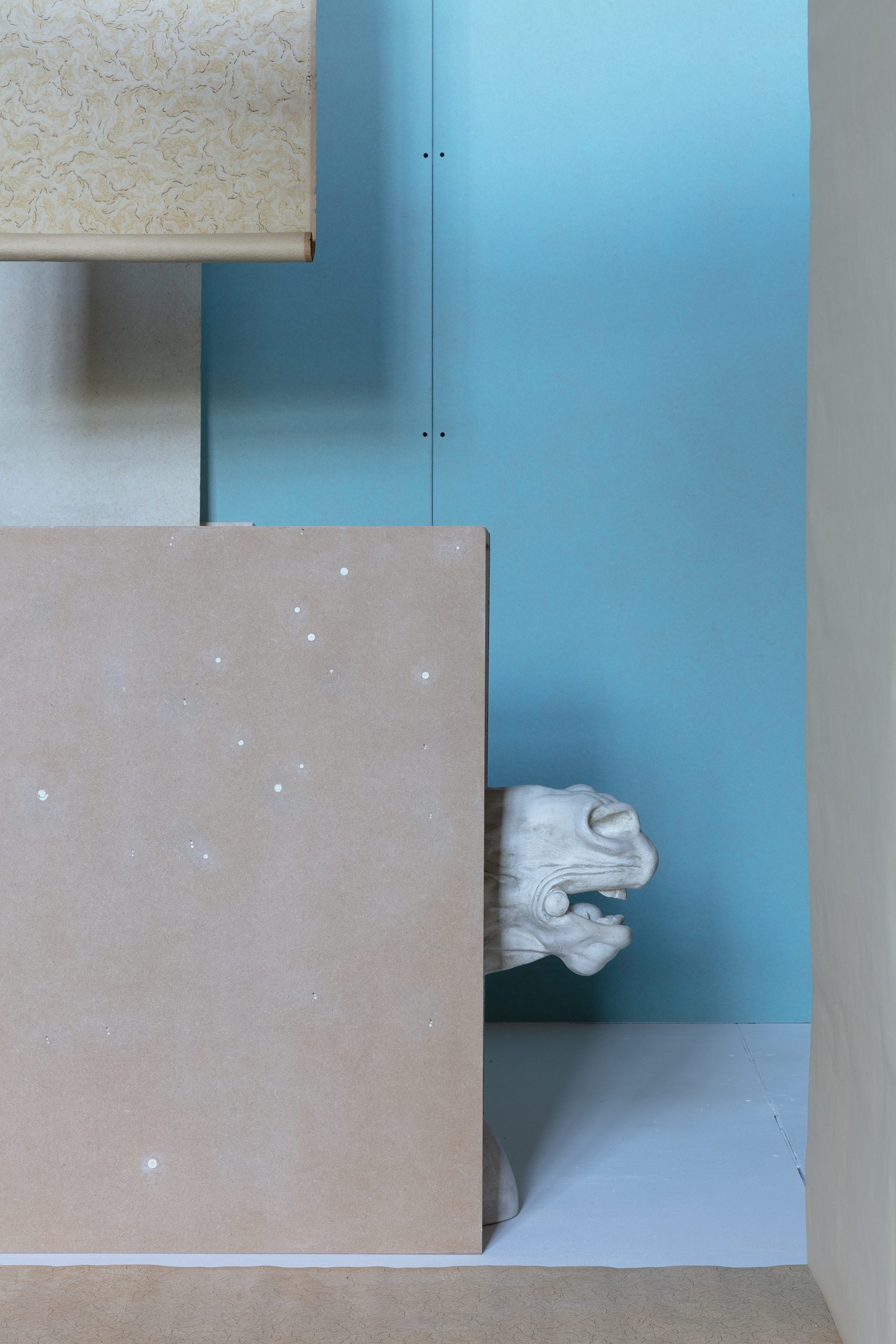
Haris Epaminonda
Installation view, Inserzioni, Castello di Rivoli Museo d’Arte Contemporanea, Rivoli-Torino, 2026
Courtesy Castello di Rivoli Museo d’Arte Contemporanea, Rivoli-Torino
Photo Sebastiano Pellion di Persano
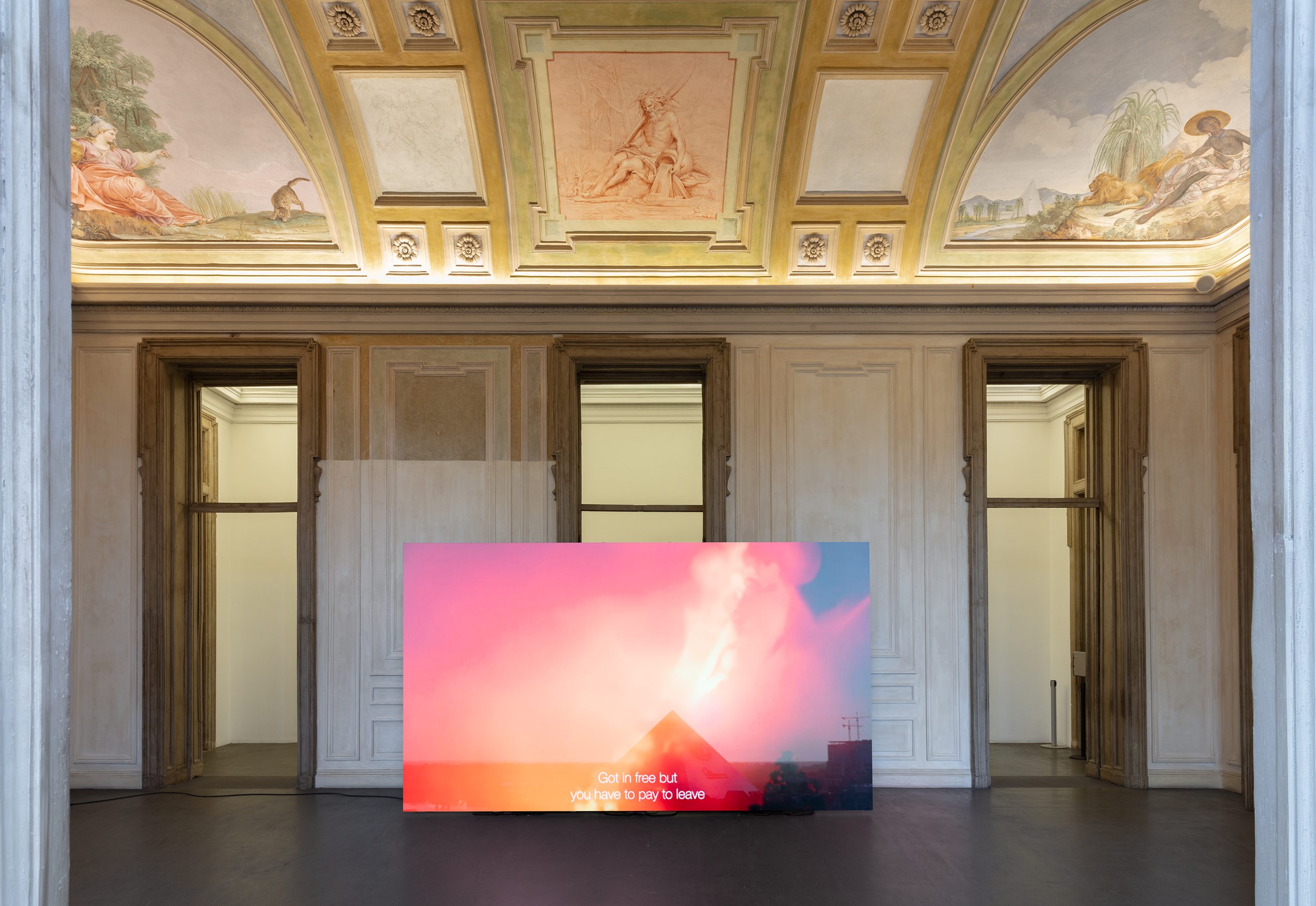
Christelle Oyiri & Neva Wireko
Hauntology of an OG, 2025
installation view, Inserzioni, Castello di Rivoli Museo d’Arte Contemporanea, Rivoli-Torino, 2026
Courtesy Castello di Rivoli Museo d’Arte Contemporanea, Rivoli-Torino
Photo Sebastiano Pellion di Persano
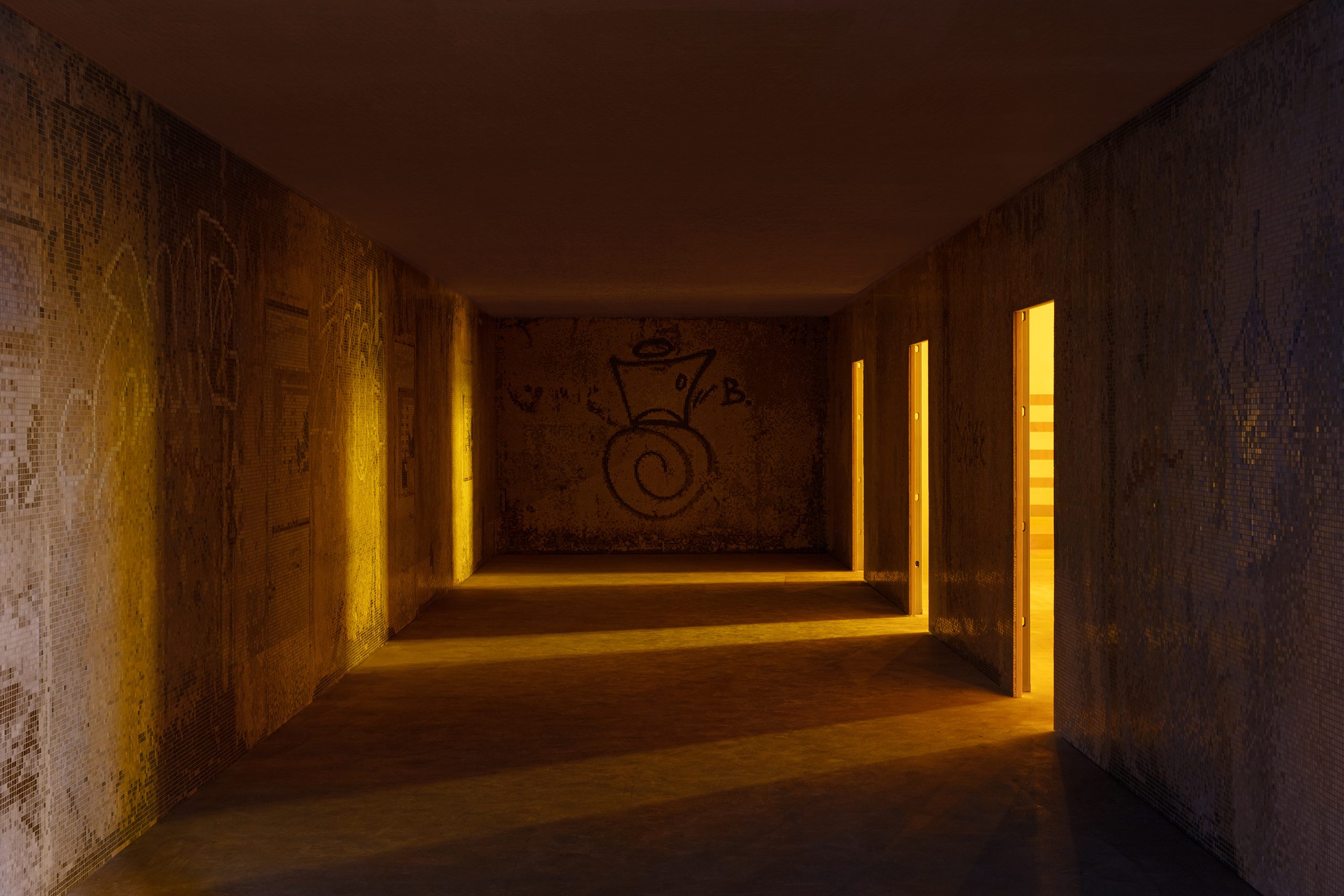
Sung Tieu
installation view, Inserzioni, Castello di Rivoli Museo d’Arte Contemporanea, Rivoli-Torino, 2026
Courtesy Castello di Rivoli Museo d’Arte Contemporanea, Rivoli-Torino
Photo Sebastiano Pellion di Persano
Inserzioni
Curated by Francesco Manacorda
Haris Epaminonda, Sung Tieu, Christelle Oyiri
From September 25, 2026
Castello Building, first and second floors
Now in its third edition, Inserzioni confirms its role as a permanent laboratory at Castello di Rivoli. Conceived to invite contemporary artists to engage with the unfinished architecture of the Castle and with the Collection display, the project periodically transforms the Museum’s Collection displays into an ever-evolving exhibition.
A liminal space, a doorway at the boundary between two different dimensions; a long corridor that opens onto a large room, evoking the memory of a marginal and marginalizing living condition; an environment in which different monumental realities are presented in the most disparate places, contexts, and situations, the result of an existence in which the very concept of a city has been broken down, fragmented, and made fluid.
These are the reflections surrounding a theme—clearly at the heart of contemporary thought—to which Haris Epaminonda, Sung Tieu, and Christelle Oyiri, the three artists featured in the third edition of Inserzioni, independently and autonomously arrived. Curated by Francesco Manacorda (from September 25, 2026), the program of commissions at Castello di Rivoli invites artists to create new works in dialogue with the Castle’s spaces and with the permanent Collection.
In an era in which monuments and urban spaces have increasingly become a place of contested historical assessment – driven by identity dynamics as well as migratory phenomena and other agents of division – creative thought engages with one of the urgencies that is increasingly emerging in different societies: finding an answer to the question, “Where do you live?”
For Francesco Manacorda, “the three artists – belonging to different generations and contexts – have been invited to develop site-specific projects in direct dialogue with several rooms of Castello di Rivoli, and have each conceived a creative gesture in response to this question, which arose spontaneously within them, without any prompting from the commissioning body. The three artists never consulted with one another during the development of their respective commissions, and yet the works share a common horizon of concerns that permeate the present in a widespread and non-linear manner: dwelling, migration, the relationship between past and present, and the invisible yet structuring forms of social life in the globalized world. This horizon was, in a certain sense, determined by the place in which the artists were invited to work: the unfinished architecture of Castello di Rivoli, itself a monument and house that was inhabited and later destined to serve as a military garrison until its conversion into a museum.”
Created to transform the museum into a place of production as well as preservation, Inserzioni periodically alters the exhibition route through interventions that take shape from the spaces of the Castle. The new works do not simply occupy the Museum’s galleries, but establish relationships with their history, their original function, and the works in the Collection, altering the way these spaces are traversed and understood.
Distributed across different points along the exhibition route, spatially discontinuous from one another, the new works establish different relationships with the environments that host them and with the works in the permanent Collection, in a kind of amplification of harmony and resonance. Each one stems from an independent investigation and from a specific relationship with a room in the Castle; it is the visitor’s journey that progressively brings these presences into relation, offering a museum that continues to produce new readings of its own heritage and of the present time.
For Haris Epaminonda (Nicosia, Cyprus, 1980), the research begins in the Hall of Bacchus and Ariadne, originally conceived as a passageway between the royal apartments. From here emerges an ideal connection with Casa Mollino, another architecture conceived as a secret place of threshold and passage. Separated by more than two centuries, the visions of Filippo Juvarra and Carlo Mollino are brought together by the artist through a shared attention to the theatrical dimension of space, to myth – Greek on one side, Egyptian on the other – and to the construction of environments in which architecture, decoration, and the body come together to generate a perceptual experience. The intervention imagines a portal between these two places, allowing unexpected correspondences to emerge between what is physically present and what the mind alludes to, making them the very substance of the experience.
The commission by Sung Tieu (Hải Dương, Vietnam, 1987) forms part of the research the artist developed for the German Pavilion at the 2026 Venice Biennale Arte, where the exhibition Ruin transformed the architecture that has housed Germany’s participation in the Giardini since 1905 into a modernist ruin by covering its façade with millions of mosaic tiles inspired by the Plattenbauten, the prefabricated buildings of East Germany intended, among others, for so-called “contract workers,” many of whom came from Vietnam.
This research takes on a new dimension in Room 18 of Castello di Rivoli, which is accessed through a corridor conceived as a transit space. An environment clad in mosaics introduces visitors to an installation composed of photographs, architectural fragments from a demolished building, and monochromatic light inspired by the lighting of German Autobahns, which radically alters the perception of color. Through elements belonging both to personal memory and to urban history, Tieu constructs an experience in which architecture becomes the place where dynamics of control, marginalisation, and belonging are manifested. The exhibition space is not merely a container for the work, but a perceptual device that makes visible the often invisible forms through which contemporary society determines who can inhabit a place, under what conditions, and according to which power relations.
For the artist and DJ Christelle Oyiri (Val-de-Marne, France, 1992), the starting point is the concept of the monument, understood as a surface for historical and ideological projections that can be constantly redefined. The project stems from an investigation that traverses different urban spaces to reflect on how history is often the result of relationships, possibilities, and changing circumstances. Through a practice that interweaves personal narrative, images, video, and archival materials, Oyiri observes the city of Memphis as a place where identities, forms of belonging, and everyday forms of negotiation are manifested. In dialogue with Castello di Rivoli, a monument that remained unfinished, now transformed into a museum and, precisely for this reason, still in some sense an impossible home, these reflections find a further level of resonance.
With this third edition, Inserzioni confirms Castello di Rivoli’s role as a place where contemporary commissions become an integral part of the life of the museum. If the Collection preserves the history of contemporary art, the new commissions extend its narrative, making the Castle a space in which the present continues to be shaped through the artists’ practice.
With thanks to the Radical Commissioning Circle for their support of Inserzioni
The project by Sung Tieu is co-commissioned by

and supported by
