Inserzioni
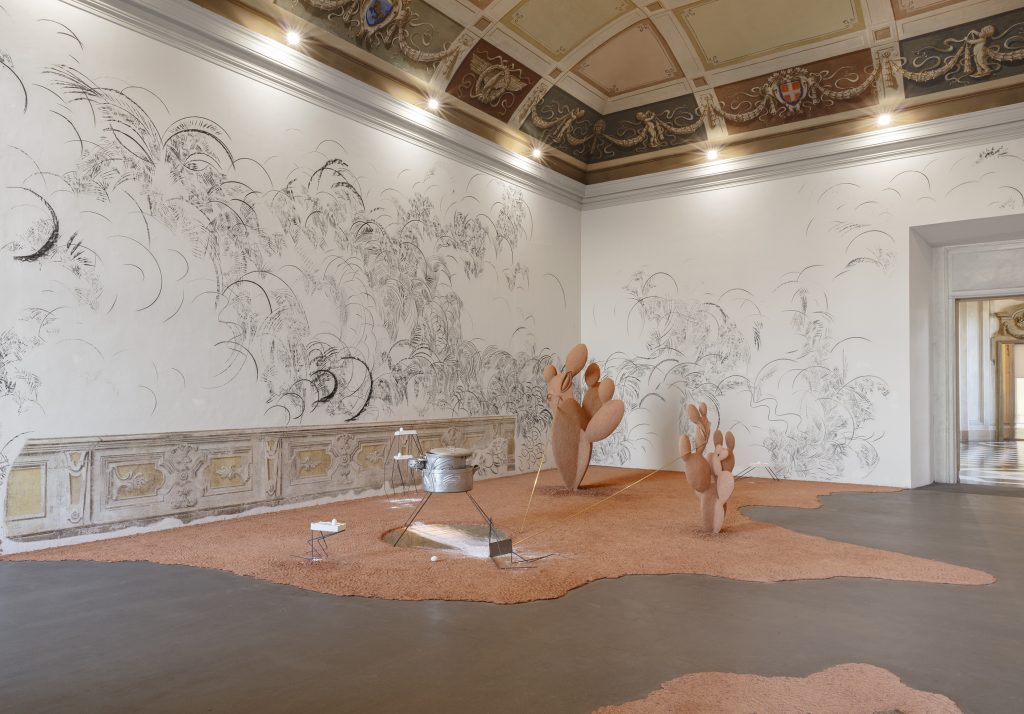
Gabriel Chaile
Installation view, Inserzioni, Castello di Rivoli Museo d’Arte Contemporanea, Rivoli-Torino, 2026
Courtesy Castello di Rivoli Museo d’Arte Contemporanea, Rivoli-Torino
Photo Sebastiano Pellion di Persano
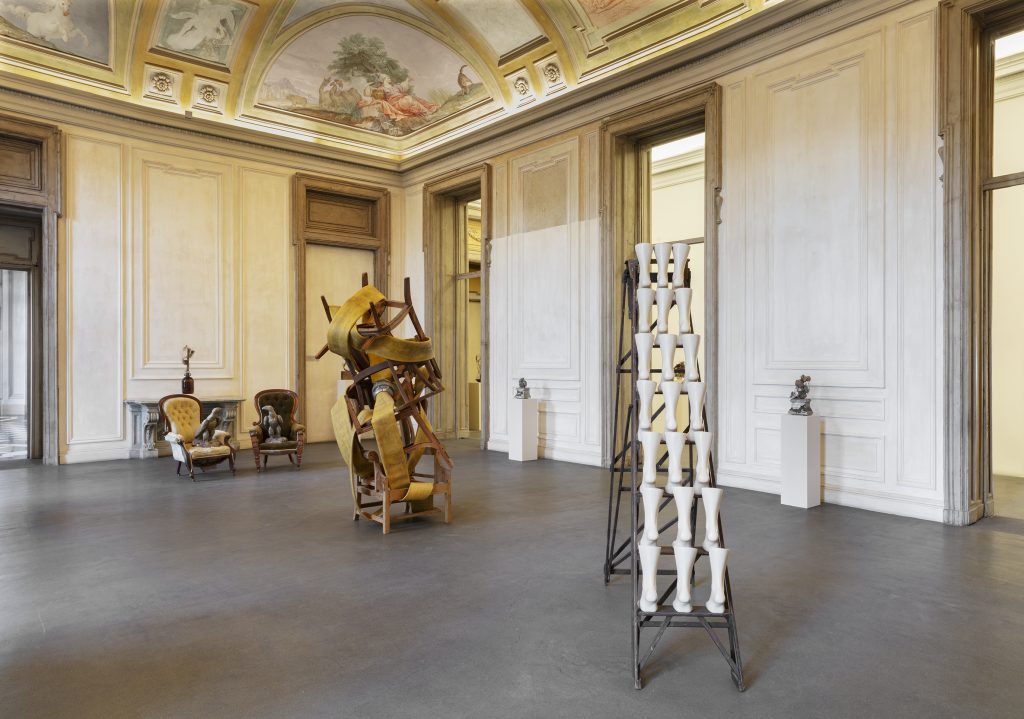
Lonnie Holley
Installation view, Inserzioni, Castello di Rivoli Museo d’Arte Contemporanea, Rivoli-Torino, 2026
Courtesy Castello di Rivoli Museo d’Arte Contemporanea, Rivoli-Torino
Photo Sebastiano Pellion di Persano
© LONNIE HOLLEY, by SIAE
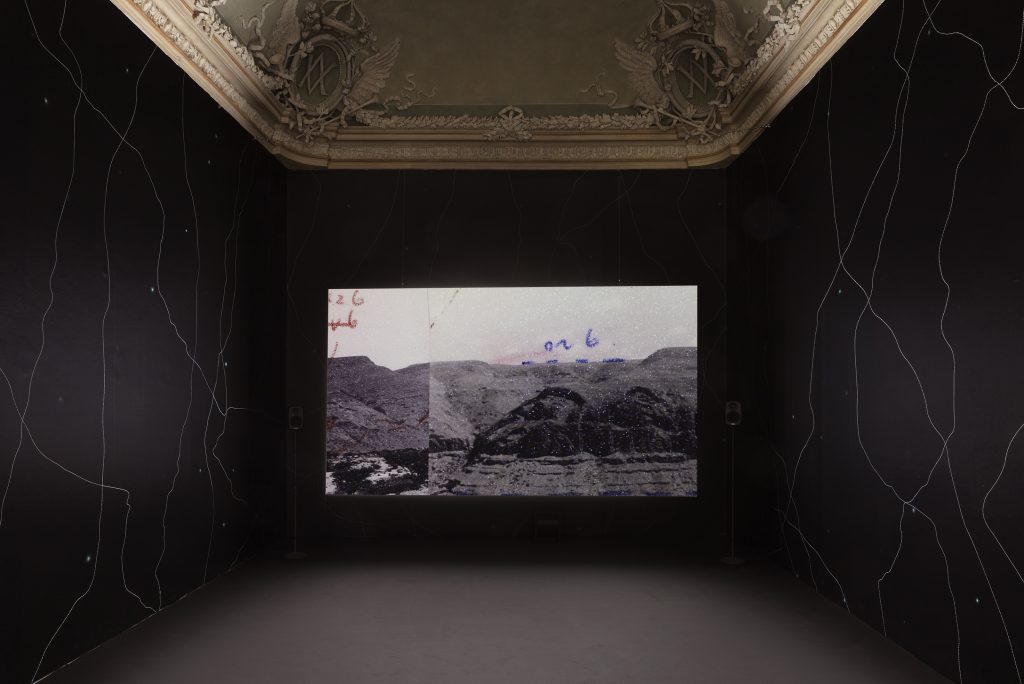
Huda Takriti
Installation view, Inserzioni, Castello di Rivoli Museo d’Arte Contemporanea, Rivoli-Torino, 2026
Courtesy Castello di Rivoli Museo d’Arte Contemporanea, Rivoli-Torino
Photo Sebastiano Pellion di Persano
© HUDA TAKRITI, by SIAE
Curated by Francesco Manacorda
Presentation by Huda Takriti curated by Linda Fossati
27 March – 30 August 2026
Castello di Rivoli Museo d’Arte Contemporanea presents the second edition of Inserzioni, the semiannual commissions programme that introduces new commissions in active dialogues with the baroque galleries used to display the permanent collection, transforming them into a continuously evolving exhibition device. The project engages with the museum’s narrative by inviting contemporary artists to interact with the unfinished architecture of the Castello and the historical and symbolic layering of its rooms, creating unprecedented relationships between artworks, space, and memory.
Curated by Francesco Manacorda, with a presentation by Huda Takriti curated by Linda Fossati, this new edition of Inserzioni involves Gabriel Chaile, Lonnie Holley, and Huda Takriti, whose practices explore themes related to memory, genealogy, and the construction of collective narratives across different geographical and cultural contexts. Designed for specific decorated rooms, the works are integrated into the path of the Collection, periodically renewing its display and broadening its cultural perspective. Through these commissions, the Museum continues to rethink the canons of art history, embracing traditions and visions that critically question Western narratives.
The project is rooted in the original vocation of Castello di Rivoli as a place where the artist’s intervention is welcome, with its architecture becoming a generative starting point. Artists are invited to actively participate in shaping the Museum’s exhibition history, continuously redefining the significance of its cultural heritage.
Gabriel Chaile (San Miguel de Tucumán, Argentina, 1985) presents an intervention around to the Castello’s medieval well, an element that connects the building to the hill on which it stands. The space is transformed into an environment suspended between historical diorama and sci-fictional scenario. In such environment, an anthropomorphic figure in clay interacts with sculptural elements evoking a makeshift encampment, suggesting a post-apocalyptic survival condition. Chaile draws intervenes directly in between fragments of historical frescoes present in the room with a drawing, evoking a cubist forest. Such genture weaves together remains of architectural and archeological nature with contemporary imagination, reflecting on history, identity, and transformation. Chaile’s practice is based on the concept of “genealogy of form,” according to which forms preserve cultural layers and traces of individual and collective memories. Made with clay, earth, and adobe, his sculptures draw inspiration from the artisanal traditions and indigenous cosmologies of northwest Argentina, evoking ancestral narratives and foundational processes of cultural transmission.
Lonnie Holley (Birmingham, Alabama, United States, 1950) presents a group of new sculptures and paintings conceived for the Sala dei Continenti (Room of the continents), decorated in the 18th century with allegorical representations reflecting Western-centered geopolitical vision of the time. Extending the Black Art tradition from the Southern United States, Holley transforms found and reclaimed materials – burnt wood, metal, plastic, and everyday objects – into assemblages that activate the narratives embedded in the materials themselves. Through an intuitive and improvisational process, Holley addresses themes such as collective memory, social inequalities, historical violence, and the potential for spiritual and political transformation. Within the context of the Castello, the works establish a critical tension with the room’s historical representations, offering new perspectives on power and memory. Sculptures and paintings on quilt evoke collective presences and symbolic genealogies that redefine the perception of the exhibition space.
Huda Takriti’s practice (Damascus, Syria, 1990; lives and works in Vienna) brings together archival research, video and performance, resulting in installations that place moving images and historical materials in relation to the architectural setting. For Inserzioni, the artist presents a project that investigates the role of images, cinema, institutions and industry in shaping post-World War II narratives.
The intervention brings together the video Clarity is the Closest Wound to the Sun (2023) and two new productions, including It Is Always Midnight In Their Minds (2026), developed from research conducted in Italian archives. The work explores the relationship between the Ente Nazionale Idrocarburi (ENI), former European colonies – including Italian ones – and those still struggling for liberation in the 1950s and 1960s, examining the intersections of political support, economic interests, and film production within the context of decolonisation processes.
Alongside the videos, Takriti creates a vinyl installation conceived as a contemporary fresco that extends along the walls of Room 29, establishing a dialogue with the historical decorations of the palace. The project reflects on the ways historical narratives are constructed and transmitted, questioning the role of images in shaping the collective imaginary.
Huda Takriti’s project is realised with the support of the Austrian Federal Ministry of Housing, Arts, Culture, Media, and Sport (BMKÖS), Section IV – Arts and Culture

and is produced in collaboration with Phileas – The Austrian Office for Contemporary Art

No posts found.