Marisa Merz – La danza delle ore (The Dance of the Hours)
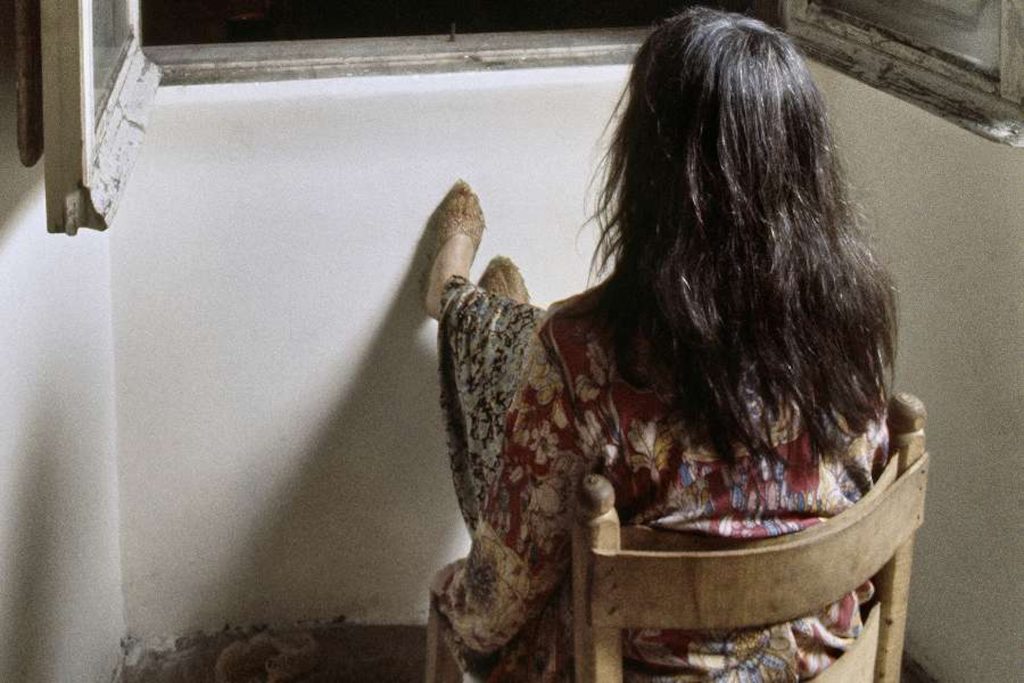
Marisa Merz wearing Scarpette, Galleria L’Attico, Rome, 1975
Photo Claudio Abate
Curated by
Chiara Bertola, Sébastien Delot, Francesco Manacorda, Beatrice Merz, Chiara Parisi, Marianna Vecellio
29 October 2026 – 4 April 2027
Castello di Rivoli Museo d’Arte Contemporanea, Fondazione Merz and GAM – Galleria Civica d’Arte Moderna e Contemporanea di Torino have joined forces to present a three-part exhibition celebrating the centenary of Marisa Merz’s birth. Conceived to retrace the work and legacy of the artist, born in Turin on 23 May 1926, Marisa Merz – La danza delle ore constitutes an unprecedented retrospective, one that is unlikely to be replicated in terms of comprehensiveness and depth.
The exhibition brings together an extraordinary collection of works, some of which have never been shown before, bearing witness to a creative life that continues to be a source of inspiration and artistic rediscovery throughout the world. The three-part exhibition offers the opportunity to explore different facets of Marisa’s oeuvre, such as the creative process and the use of materials; everyday time as a creative dimension and the home as an alchemical laboratory; and the notion of space as a physical and metaphysical place. Overall, the exhibition aims to reflect the continuous evolution and transformation that the artist has undertaken throughout her life, giving rise to a body of work that remains ever-open.
The exhibition at Castello di Rivoli, curated by Francesco Manacorda and Marianna Vecellio, offers an opportunity to reconstruct and present once again to the public the installation E il naufragar m’è dolce in questo mare, a major project that Marisa presented in 1980 at the Tucci Russo gallery in Turin, before presenting a different version later that same year at the 39th Venice Biennale. The installation, situated in the Manica Lunga on the third floor of Castello di Rivoli, will serve as the exhibition’s focal point, from which themes and explorations will branch out. These include the striving to reveal the invisible and the artist’s ability to visualise metaphysical visions, revealing reality beyond any sensory appearances. Furthermore, the exhibition invites a group of artists who continue certain elements of Marisa’s practice and vision to participate in an expanded retrospective: Leonor Antunes (Lisbon, 1972), Micol Assaël (Rome, 1979), Beatrice Bonino (Turin, 1992), Miriam Cahn (Basel, 1949), Tacita Dean (Canterbury, 1965), Thea Djordjadze (Tbilisi, Georgia, 1971), Lara Favaretto (Treviso, 1973), Daiga Grantina (Saldus, Latvia, 1985), Armineh Negahdari (Tehran, 1994), Solange Pessoa (Ferros, Minas Gerais, Brazil, 1961).
“The exhibition at the Castello,” note Francesco Manacorda and Marianna Vecellio, “emphasises the environmental dimension of Marisa Merz’s practice, giving rise to a polyphonic narrative that speaks of the sky and flight, of parallel universes and of the lunar, spiritual, and feminine spheres.”
Curated by Beatrice Merz and Sébastien Delot, the Fondazione Merz displays the most unexpected aspect of the artist’s research, through a selection of works organised around the idea of process and transformation. The central theme is Marisa’s approach to the selection and arrangement of materials, alongside her method of ‘making’ and composing the works: an apparent imbalance that reveals itself as a precise equilibrium, capable of bringing out the hidden potential of objects and materials. The at times seemingly ephemeral works arise from a process of continuous evolution, consisting of subtle variations through which the artist progressively approaches the essence of her subjects.
“With this exhibition, the Fondazione Merz,” say Beatrice Merz and Sébastien Delot, “establishes itself as a vital space dedicated to the hitherto unseen and to the pursuit of experimentation: a space where the visitor can access the artist’s most hidden sphere, her germinal thoughts, her intuitions and the silent dialogue that accompanies the birth of the works. What is revealed is a deeply personal expressive language, in which high and low, highbrow and popular culture, artistic and everyday practices intertwine to give life to surprising works, marked by a subtle force.”
At the GAM – Galleria Civica d’Arte Moderna e Contemporanea, curated by Chiara Bertola and Chiara Parisi, the most intimate chapter of the exhibition will be presented, making use of a historical interpretation that focuses on the most everyday and domestic aspects of Marisa Merz’s work. The exhibition itinerary will begin with the concept of the home-studio-workshop, the generative and transformative space par excellence, where the realm of art coincides with that of life. The exhibition offers an opportunity – following careful restoration by the Centro di Conservazione e Restauro di Venaria – to examine the work in the GAM’s collections, Living Sculpture, 1966.
“The exhibition at the GAM,” say Chiara Bertola and Chiara Parisi, “is conceived as an intimate and welcoming space, capable of evoking a sense of home. Important historical works coexist with moments of contemplation and introspection, visualising open and constantly evolving creative processes. The exhibition itinerary thus becomes a metaphor for artistic creation, which is nourished by relationships and time, in which every element contributes to the creation of the work.”
The exhibition will be accompanied by a single catalogue to be presented at a conference dedicated to the artist.
The exhibition is made possible thanks to the support of Fondazione CRT


With the patronage of Ministery of Culture
The exhibition at Castello di Rivoli is supported by FONDAZIONE TRIDAMA
Partner

Trenitalia is the Official Carrier of Castello di Rivoli
Exclusive discounts on exhibition admission for Trenitalia customers
Travel to Castello di Rivoli (Turin) by Frecciarossa, Intercity or Regional train and visit the exhibition “Marisa Merz – La danza delle ore (The Dance of the Hours)“, on view from 29 October 2026 to 4 April 2027.