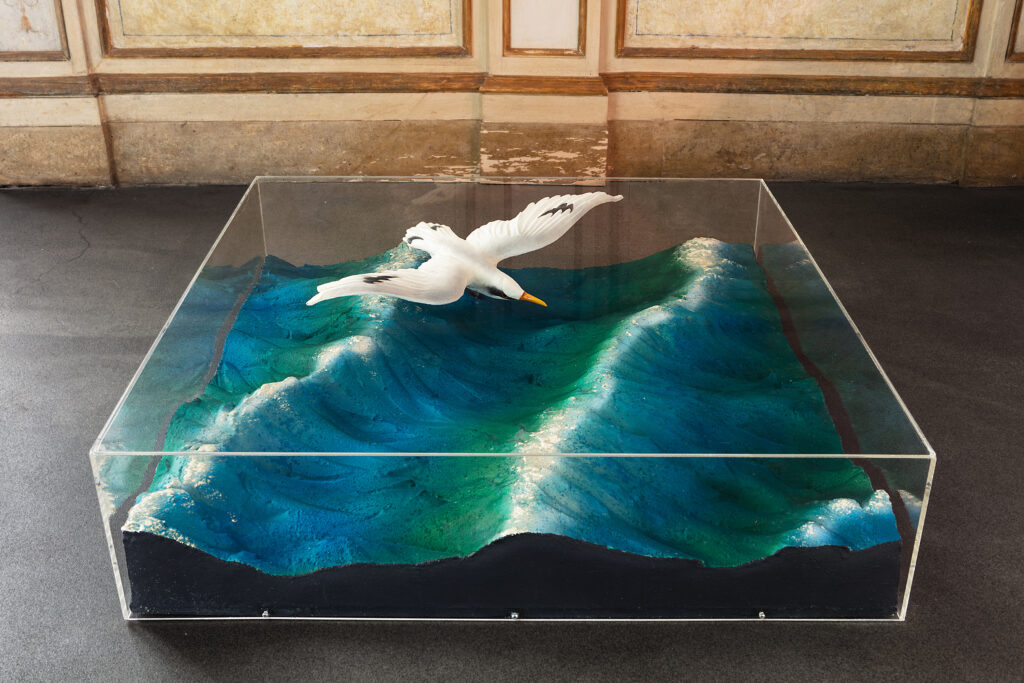
Piero Gilardi | Mare con gabbiano
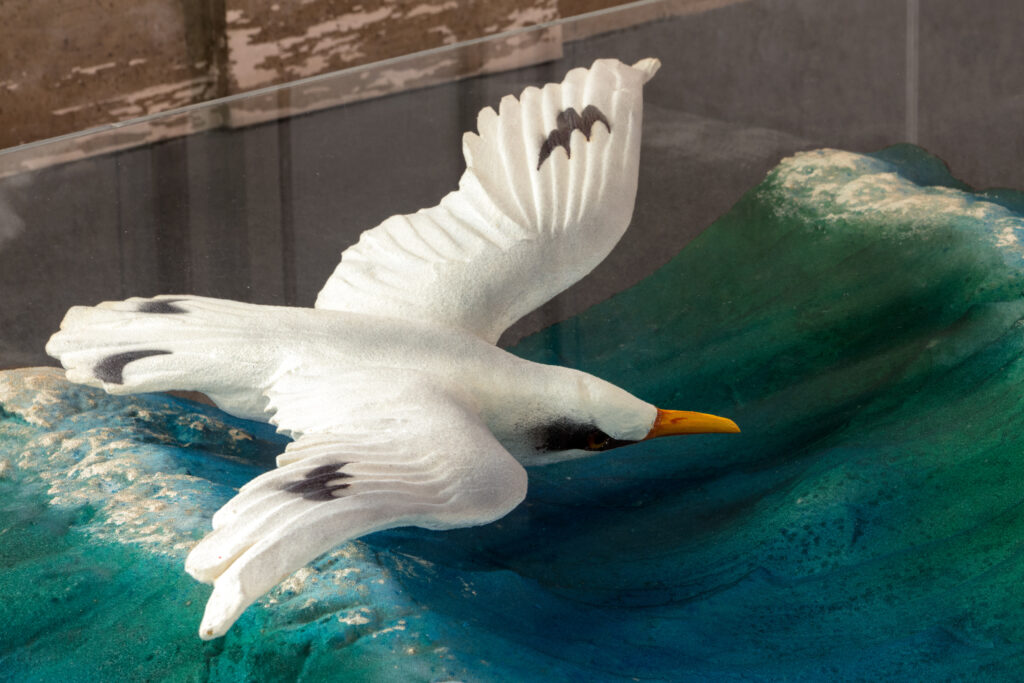
Mare con gabbiano (Sea with Seagull), 1967
Polyurethane foam
25 x 100 x 100 cm
Castello di Rivoli Museo d’Arte Contemporanea, Rivoli-Torino
Mare con gabbiano (Sea with Seagull), which recently entered the collection. In the context of a project that aims to showcase Gilardi’s practice, other pieces by the artist are also on display, from his beginnings up to the 2000s, thanks to a generous loan from the Fondazione Centro Studi Piero Gilardi.
At his debut in 1963, Piero Gilardi produced works that envisioned the future as a world dominated by technology, as in the case of Macchina per discorrere (Discussion Machine). He worked with polyurethane foam, which he used to propose living models such as Igloo. In 1965, he made his first Nature-carpets. Soft and pleasant to the touch, these installations were conceived for the human beings of tomorrow. Nature-carpets were first exhibited the following year at the Gian Enzo Sperone Gallery in Turin. The series includes Terreno di montagna (Mountain Land), Gretto di fiume (River Gravel Bed), Temporale e pesche cadute (Thunderstorm and Fallen Peaches), Mare con gabbiano (Sea with Seagull), exhibited here.
In 1966, Gilardi organised, together with Michelangelo Pistoletto and Gianni Piacentino, Arte Abitale (Habitable Art) at the Sperone Gallery. Also including Giovanni Anselmo and Mario Merz, the artists in the exhibition wanted to go beyond the concept of art as an aesthetic experience, to enter the space of lived reality. In Turin, Gilardi was also among the promoters of the Deposito d’Arte Presente, an exhibition space dedicated to new artistic trends and promoted by a group of collectors led by Marcello Levi. Since 1968, Gilardi’s activities mainly focused on writing, cultivating direct relationships with other artists, and participating in the organization of international exhibitions. At the same time, Gilardi developed the vision that an artistic act can be political, and he devoted himself to activism. He put his artistic skills at the disposal of associations and groups, supporting their social commitment and protest activities. Around 1985, he practiced art therapy in various psychiatric hospitals in Turin. In 2008, Gilardi founded the PAV Parco Arte Vivente in Turin, a public space dedicated to exhibitions and projects focused on ecological sensibility, aesthetic education and social inclusion. In recent years, he continued his activity of political engagement and active participation, as exemplified by Masso della crisi (Crisis Rock), produced to accompany street demonstrations.
In 2012, Castello di Rivoli organised Piero Gilardi. Collaborative Effects 1963 – 1985, a solo exhibition covering his career, curated by Andrea Bellini.
The project is supported by the PAC2024 – Piano per l’Arte Contemporanea promoted by the Directorate-General for Contemporary Creativity of the Italian Ministry of Culture