Castello di Rivoli Museo d’Arte Contemporanea announces 2026 exhibition programme
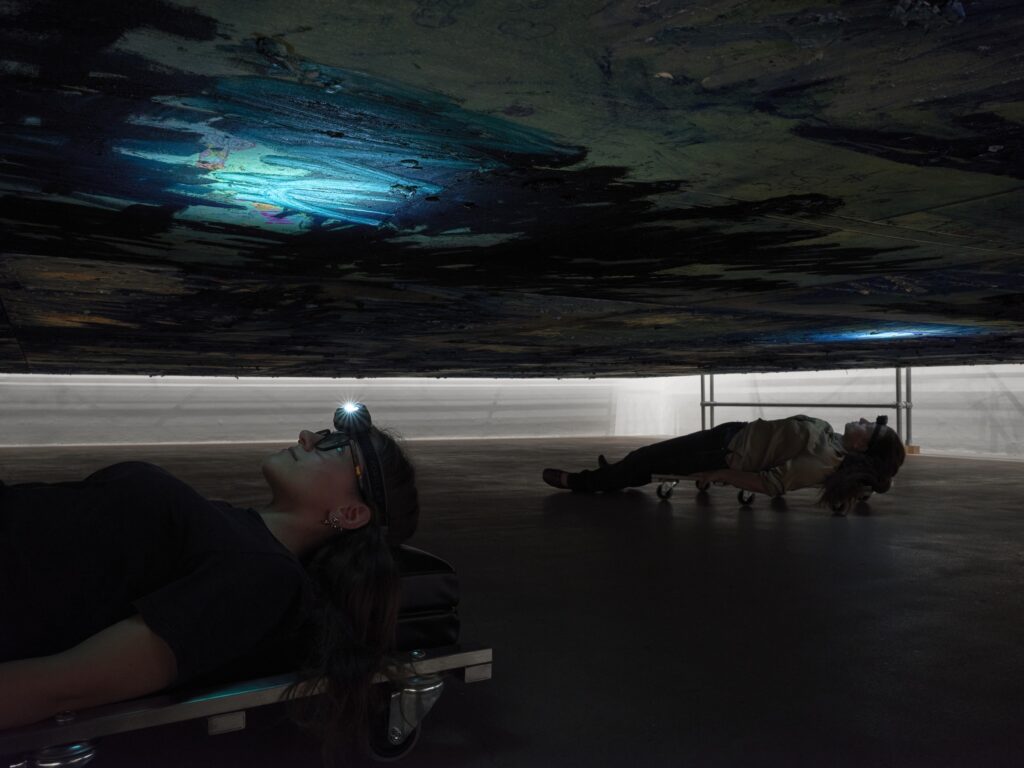
Oscar Murillo
A see of history, 2025
Installation view, Inserzioni, Castello di Rivoli Museo d’Arte Contemporanea, Rivoli-Torino, 2025
Courtesy the artist
Photo Tim Bowditch
© Oscar Murillo
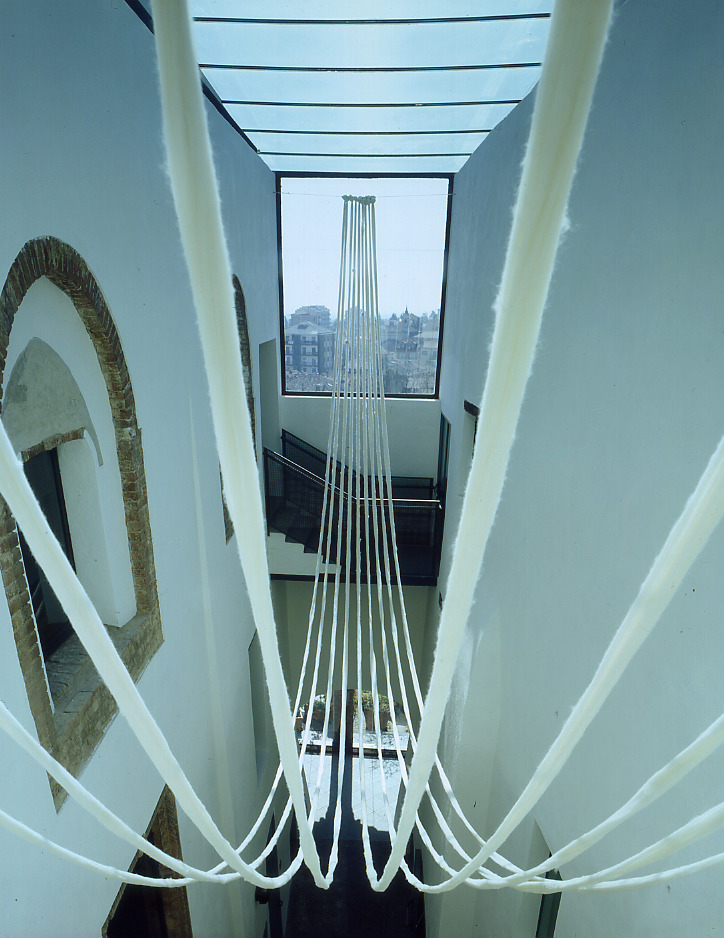
Cecilia Vicuña
Canoa de luz, 2000
in Quotidiana, at Casa del Conte Verde, Rivoli-Torino
Castello di Rivoli Museo d’Arte Contemporanea, Rivoli-Torino
Photo Paolo Pellion

Marisa Merz
Senza titolo (Untitled), 1997
paraffin, lead, copper wire, water, motor
9 x 84 x 88 cm
Castello di Rivoli Museo d’Arte Contemporanea, Rivoli-Torino
on loan from
Fondazione per l’Arte Moderna e Contemporanea CRT, 2004
Photo Paolo Pellion
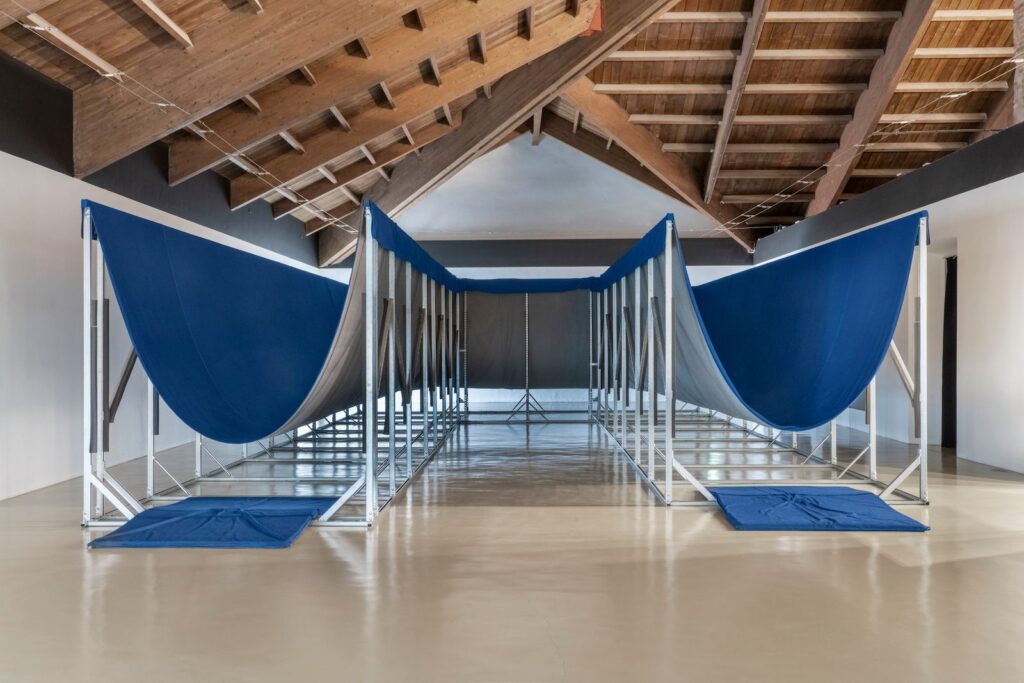
Paola Pivi
Free Land Scape, 2022
denim, metal, foam
3 x 12,8 x 8 m
Courtesy Perrotin
Photo Ela Bialkowska OKNO studio
Castello di Rivoli Museo d’Arte Contemporanea
announces 2026 exhibition programme
Highlights include significant solo exhibitions of Cecilia Vicuña and Marisa Merz, Il castello incantato 2.0 and the second edition of Inserzioni.
Castello di Rivoli Museo d’Arte Contemporanea presents its exhibition programme for 2026, which weaves together commissions, historical research, and contemporary practices.
The programme includes the second edition of Inserzioni, a commissions project that integrates new works into the Collection’s display route; two major exhibitions dedicated to Cecilia Vicuña
and Marisa Merz—artists who, through different languages and trajectories, have redefined the relationship between art, time, matter, and the political dimension of experience—as well as the second iteration of the museum’s project for non-adults, Il castello incantato.
Inserzioni
Curated by Francesco Manacorda
26 March – August 2026
Castello Building, 1st and 2nd floors
Inserzioni is a biannual commissioning program that introduces site-specific works into the fabric of the rooms dedicated to the Permanent Collection, transforming them into a constantly evolving group exhibition.
From March to August 2026, the second edition of the project
involves Gabriel Chaile (Argentina, 1985), Lonnie Holley (United States, 1950), and Huda Takriti (Syria, 1990), whose intervention is curated by Linda Fossati. Inserzioni invites each artist to conceive a work for a ceremonial room of the Castle, in dialogue with the unfinished architecture and with the historical narrative of art proposed by the Museum.
The project makes it possible to welcome new voices while simultaneously reintroducing figures, movements, and geographical areas that have so far not been fully represented in the Collection. The third edition of Inserzioni is scheduled to take place from September 2026 to February 2027.
Cecilia Vicuña – El glaciar ido (The vanished glacier)
Curated by Marcella Beccaria
30 April – 20 September 2026
Manica Lunga, Third floor
Cecilia Vicuña – El glaciar ido (The vanished glacier) is the artist’s first solo exhibition in an Italian museum. Born in Santiago de Chile in 1948 and now based in New York, Cecilia Vicuña is an artist, poet, and activist. Feminist and ecological, her thinking focuses on issues related to the defense of democracy, freedom of expression, and decolonial practices aimed at safeguarding the cultural heritage of Indigenous populations. Performance, poetry, drawing, painting, video, and installations, both minimal and monumental, make up her artistic world.
The concept of precariousness informs Vicuña who, since the 1960s, has coined the definition of “Arte Precario” (Precarious Art). Favoring a terminology and a practice free of colonial legacies, the artist’s practice includes ephemeral and participatory works, often made with small debris and found materials, in creative dialogue with the places and communities she encounters. The exhibition at the Castello consists of a new commission conceived by Vicuña for the Manica Lunga, inspired by the human and geological history of the territory.
The exhibition will include a focus on the artist’s poetic production and video works, bringing into the project images, sounds, and songs that have been an integral part of her practice since its beginnings.
Marisa Merz – The Dance of the Hours
The exhibition is part of the exhibition project Marisa Merz – The Dance of the Hours, organized with Fondazione Merz, Turin, and GAM – Galleria Civica d’Arte Moderna e Contemporanea, Turin.
Curated by Francesco Manacorda and Marianna Vecellio, Chiara Bertola and Chiara Parisi, Beatrice Merz and Sébastien Delot
29 October 2026 – 4 April 2027
Manica Lunga, Third floor
Marisa Merz, the only female protagonist of the Arte Povera movement, employed multiple expressive languages: painting, sculpture, drawing, video, and installation. On the occasion of the centenary of Merz’s birth, three major Italian institutions are jointly organizing an exhibition dedicated to the artist, conceived in three acts and curated by a different team for each exhibition venue.
The three chapters aim to bring to life a collective and multifaceted portrait of the artist that reflects the depth of her contribution to the evolution of Italian and global art. The exhibition at Castello di Rivoli will begin with the reconstruction of “E il naufragar m’è dolce in questo mare”, an important exhibition project that the artist presented in 1980 at the Turin gallery Tucci Russo and later replicated at the Venice Biennale the same year. In keeping with the artist’s practice, the installation will constitute the exhibition’s core, from which themes and research will unfold.
The exhibition will take the shape of an ‘expanded retrospective’ and include the participation of contemporary artists who are formally or conceptually inspired by Marisa Merz, or who continue her innovative work, procedurally centered on transformation and continuous additive reworking.
Il castello incantato 2.0
With the curatorial collaboration of Marcella Beccaria, Francesco Manacorda, and Paola Zanini
Spring 2026
In 2026, Castello di Rivoli strengthens its commitment to younger audiences through Il castello incantato 2.0, an evolution of the participatory project dedicated to children and young people, launched on the occasion of the Museum’s fortieth anniversary. The new exhibition project includes works by artists with interventions specifically conceived for young and very young audiences.
Among these is Rivane Neuenschwander, author of a special collaborative work developed with local children and the creatures that shape their dreams and nightmares. Continuing the dialogue with artists from the Collection, the exhibition path also includes works and installations by John Baldessari, William Kentridge, Eduardo Navarro, Paola Pivi, and Remo Salvadori.
From spring onwards, the project intersects with School of Curiosity, a new initiative by the Education Department that envisions the Museum as a place for activating thought and generating questions. Programs for schools, families, and adults will focus on stimulating the audience’s curiosity about what they do not yet know and what the artists invite them to discover.
Huda Takriti’s project is produced in collaboration with Phileas – The Austrian Office for Contemporary Art